DEFINITION
A recompete is the next competition for work the government still needs.
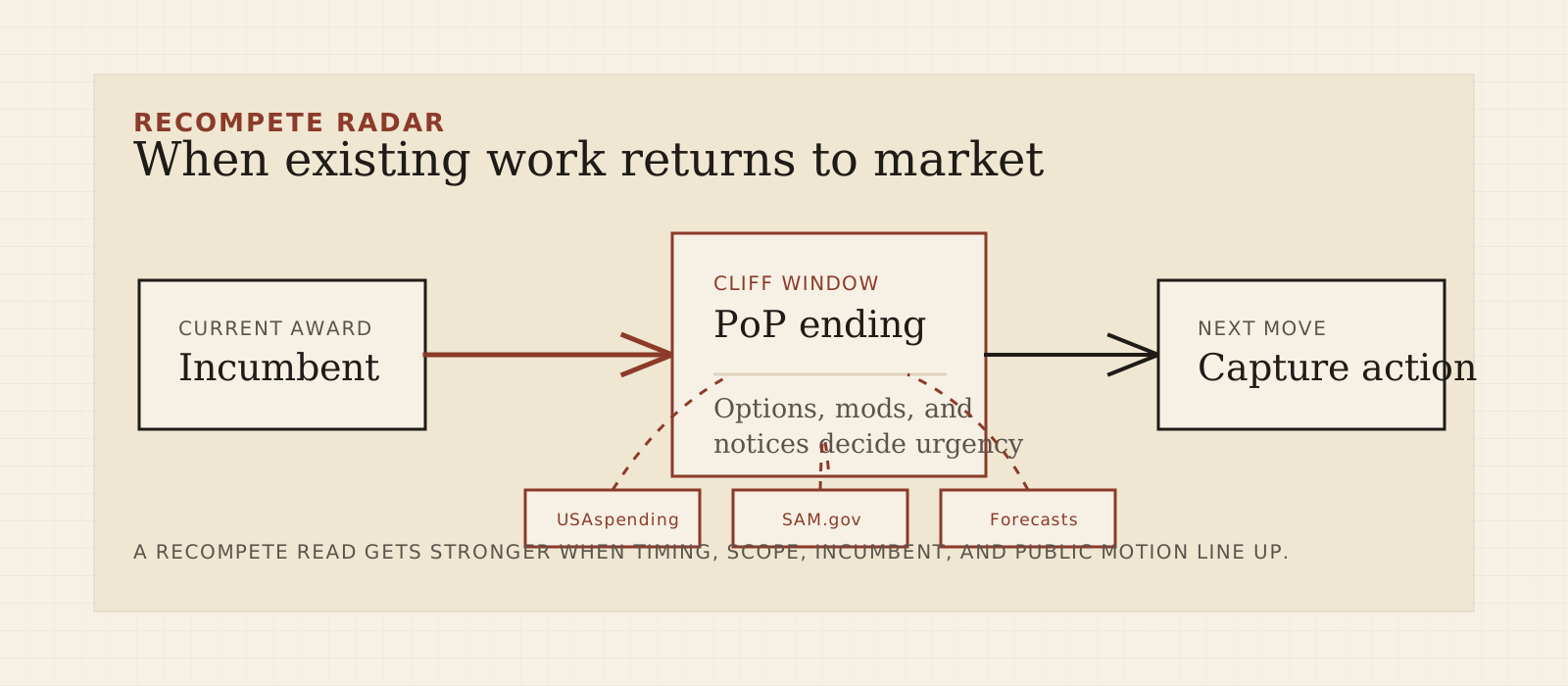
A federal contract recompete happens when an agency competes a requirement that is already being performed under an existing contract, task order, BPA call, or similar award. The incumbent contractor may pursue the work again, and challengers may decide whether they have a credible path to bid, team, or subcontract.
Recompetes matter because the agency, scope, incumbent, vehicle, staffing pattern, and customer expectations are not starting from zero. A challenger needs to understand the current award before deciding how to enter the next competition.
- Existing work
- The agency is already buying some version of the requirement.
- Follow-on competition
- The next award may be competed before, near, or after the current period ends.
- Incumbent context
- The current contractor has delivery history and customer knowledge.
TIMING SIGNALS
The end date starts the question; it does not answer it.
A period-of-performance end date can reveal a possible cliff, but a recompete read gets stronger when other public signals line up. Option-year history, modification patterns, Sources Sought notices, RFIs, draft solicitations, agency forecasts, and related award records can all change the interpretation.
A small contractor should treat timing as evidence-weighted. If only the end date is visible, the item may deserve a calendar reminder. If an end date lines up with exhausted options and a matching Sources Sought notice, the item may deserve active capture work.
- Cliff date
- When the current award period appears to end.
- Option pattern
- Whether the agency may still have options or extensions available.
- Procurement motion
- Sources Sought, RFIs, draft RFPs, forecasts, or related notices.
SMALL BUSINESS USE
Recompete monitoring gives small teams more time to prepare.
Small contractors rarely win by discovering an opportunity on the same day everyone else sees the final solicitation. Recompete monitoring helps them prepare earlier: identify the incumbent, study the scope, find possible teaming partners, and tune a capability statement to the buyer's real requirement.
The practical output should be a short decision. Act now, calendar it, or watch only. A long export of expiring contracts is less useful than a small list with source context and a clear next move.
- Prime path
- Decide whether the company can credibly lead the follow-on.
- Teaming path
- Approach incumbents, likely challengers, or complementary partners earlier.
- Watch path
- Hold lower-confidence signals until public evidence improves.
COMPARISON
A recompete is different from a brand-new opportunity.
A new requirement may have less incumbent history, fewer performance clues, and more uncertainty about how the agency will shape the buy. A recompete starts with a public record of what the government bought last time.
That history can help challengers and subcontractors. It can also reveal when the incumbent advantage is strong enough that a teaming strategy is more realistic than a prime bid.
- New opportunity
- Less historical performance context and sometimes less visible incumbent structure.
- Recompete
- Current award, incumbent, scope, vehicle, and timing evidence can be studied.
- Best action
- Depends on the source trail, not the word recompete by itself.