FOUNDATION
Set up the business before chasing subcontracting work.
A subcontractor needs more than technical skill. Primes want to know that your company can sign agreements, invoice cleanly, carry appropriate insurance, staff the work, protect customer information, and deliver without creating management drag.
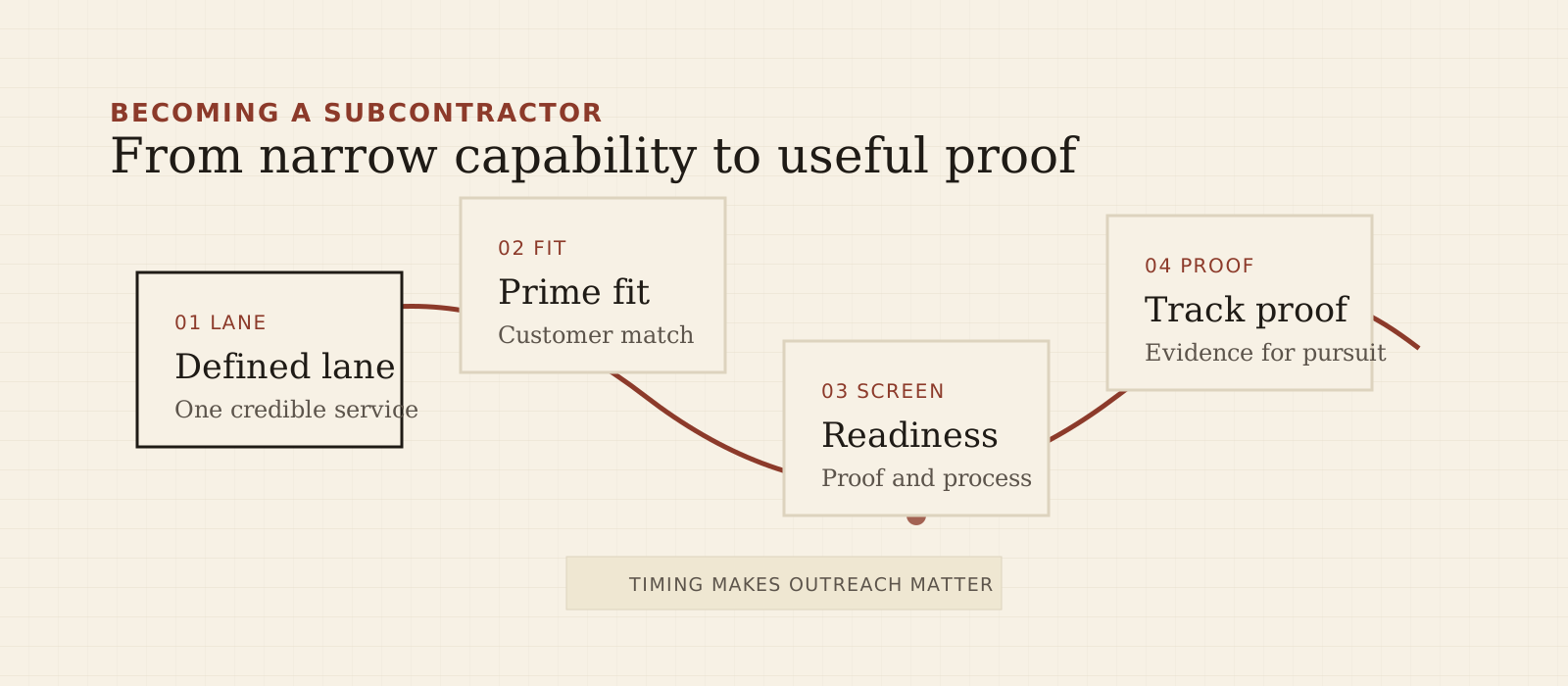
Start with a tight service lane. A prime is more likely to remember a subcontractor that solves one clear problem than a company that claims it can support every possible requirement.
- Service lane
- Define the work you can perform repeatedly and credibly.
- Business basics
- Maintain registration, insurance, banking, invoicing, and tax information.
- Proof
- Collect references, project examples, resumes, certifications, and delivery metrics.
MARKET ENTRY
Find primes that already need your lane.
The fastest subcontracting path is usually through a prime that already has customer access and a requirement that needs your capability. For federal contractors, that means watching incumbents, expiring contracts, sources sought notices, and teaming patterns.
Do not pitch every prime the same way. Anchor outreach to a specific contract, agency, location, NAICS lane, or recompete signal so the prime can see why the conversation matters now.
- Incumbents
- Look for current prime contractors holding work that matches your capability.
- Recompetes
- Approach before the solicitation window is crowded.
- Fit
- Show where your past performance, certifications, geography, or staffing fills a gap.
QUALIFICATION
Prepare for prime contractor screening.
Primes will often screen subcontractors for financial stability, insurance, safety or quality processes, cybersecurity posture, staffing depth, past performance, pricing, and responsiveness. The specific checklist depends on the industry and customer.
For government work, be ready with a capability statement, UEI and SAM status if applicable, NAICS codes, socioeconomic certifications, contract references, and a clear explanation of what role you want on the team.
- Capability statement
- One page that connects your company to the prime's requirement.
- Compliance posture
- Know which clauses, security standards, or reporting rules apply to your work.
- References
- Provide proof that your team has delivered similar work.
PATH
Use subcontracting as a path to better opportunities.
Subcontracting can help a small company build past performance, learn customer expectations, understand contract operations, and develop relationships before pursuing prime work.
The key is to choose subcontracting roles intentionally. A good role gives your team visible responsibility, useful performance evidence, and a stronger position before the next recompete.
- Learn the customer
- Use delivery to understand expectations, cadence, and buying behavior.
- Build evidence
- Track outcomes that can support future past performance.
- Watch timing
- Monitor contract cliffs so you can prepare before recompete decisions harden.