DEFINITION
What is a subcontractor contract?
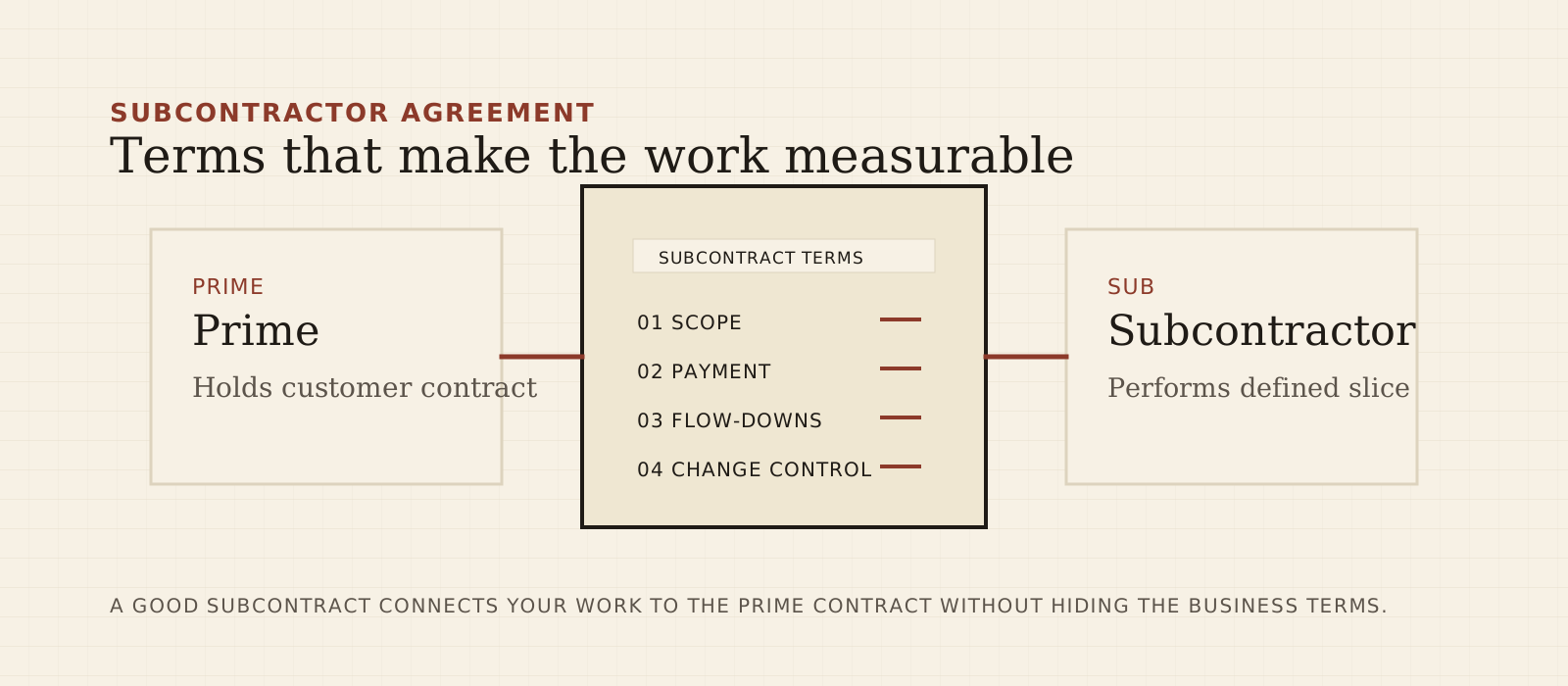
A subcontractor contract is an agreement between a prime contractor and another company that performs a specific portion of the work. It does not replace the prime contract with the customer; it sits underneath it and defines how the subcontractor will contribute.
For government contractors, the subcontract is often where the practical details live: labor categories, deliverables, reporting cadence, invoicing rules, confidentiality, compliance flow-downs, and the boundaries of the subcontractor's role.
- Parties
- Names the prime contractor and subcontractor, plus any customer or program context.
- Scope
- Defines the specific work, deliverables, assumptions, and exclusions.
- Term
- Sets the performance period and renewal or extension mechanics.
CORE TERMS
Key components to review before signing.
A clean subcontractor agreement should make the work measurable and the business terms understandable. Ambiguous language is a risk because the subcontractor usually depends on the prime for customer communication, payment flow, and change approval.
Before signing, compare the subcontract terms against the pursuit plan and the prime contract context. If the subcontract asks your team to absorb obligations you cannot see or control, clarify that before delivery begins.
- Payment terms
- When invoices can be submitted, when payment is due, and whether payment depends on the prime getting paid.
- Change control
- How scope, schedule, rates, or staffing changes are approved.
- Acceptance
- How deliverables are reviewed, accepted, rejected, or revised.
- Flow-downs
- Which prime contract clauses apply to the subcontractor.
CLAUSES
Clauses that deserve extra attention.
Not every clause carries the same risk. Small subcontractors should pay close attention to terms that affect cash flow, performance responsibility, customer access, intellectual property, data handling, and termination.
The goal is not to avoid every obligation. The goal is to know which obligations your team can manage and which ones should be narrowed, priced, or escalated during negotiation.
- Pay-when-paid
- Can delay cash flow if the prime waits for customer payment before paying the subcontractor.
- Termination
- Defines when the prime can end the agreement and what happens to unpaid work.
- Indemnity
- Can shift liability for claims, defects, or compliance failures.
- Non-solicit
- May restrict direct customer or team relationships after the work ends.
OPERATING DISCIPLINE
How to negotiate and manage subcontractor agreements.
Good subcontract negotiation starts before pricing. Confirm the customer requirement, your exact role, what the prime expects you to own, and how changes will be handled once the contract is live.
After award, treat the subcontract as an operating document. Keep records of deliverables, approvals, invoices, meeting decisions, and change requests so performance evidence is available for the current project and future recompetes.
- Clarify scope
- Ask what is included, excluded, assumed, and dependent on the prime or customer.
- Document changes
- Do not rely on verbal changes for schedule, staffing, or deliverables.
- Track performance
- Keep delivery evidence that can support past performance and future teaming decisions.