DEFINITION
What is a prime contract?
A prime contract is the primary agreement between a project owner, customer, or government agency and the contractor responsible for delivering the work. It defines the scope, schedule, payment structure, performance obligations, and contract terms for the project.
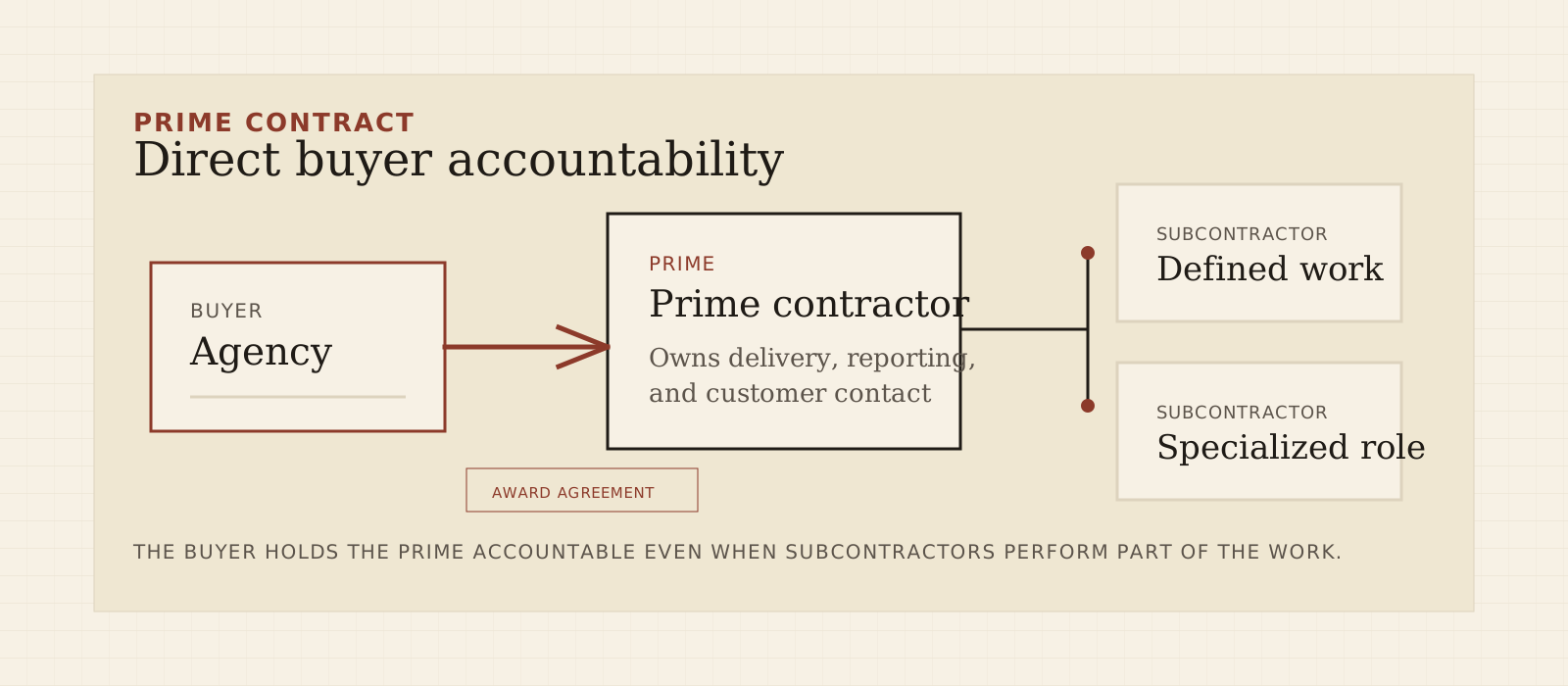
In federal contracting, the prime contract is usually the award held directly with the agency. The company holding that award is the prime contractor, and the agency looks to that company for delivery, compliance, reporting, and issue resolution.
- Direct relationship
- The prime contractor has the direct contractual relationship with the buyer or agency.
- Full accountability
- The prime is responsible for the overall result, even when subcontractors perform part of the work.
- Scope control
- The prime contract is where the core requirements, deliverables, timing, and payment terms live.
TEAMING
Prime contract vs. subcontract: the practical difference.
A subcontract is an agreement between the prime contractor and another company that performs a portion of the work. The subcontractor usually does not have the direct contractual relationship with the agency or owner.
That difference matters because the prime contractor manages customer communication, delivery risk, invoicing, and compliance flow-downs. Subcontractors may bring specialized skills, past performance, capacity, or certifications, but they work through the prime relationship.
- Prime contract
- Buyer to main contractor; covers the overall project or requirement.
- Subcontract
- Prime contractor to subcontractor; covers a defined portion of the work.
- Accountability
- The buyer holds the prime accountable for the whole outcome.
RESPONSIBILITIES
What the prime contractor is expected to manage.
Prime contractors coordinate delivery across schedule, budget, staffing, quality, reporting, and compliance. They also manage the subcontractor team and make sure lower-tier work aligns with the contract requirements.
For small businesses, moving from subcontractor to prime can change the operating burden. It can create more control over the customer relationship, but it also raises the bar for contract administration, documentation, and delivery discipline.
- Project execution
- Planning the work, assigning responsibilities, and keeping delivery on schedule.
- Customer communication
- Serving as the primary point of contact for the buyer or contracting office.
- Compliance
- Managing clauses, reporting, quality expectations, and subcontractor flow-downs.
- Risk
- Owning performance risk when work slips, scope changes, or subcontractors miss commitments.
CAPTURE USE
Why prime contracts matter before a recompete.
When a contract approaches the end of its period of performance, the current prime contract tells a capture team what the agency bought, who holds the relationship, which vehicle was used, how the work was structured, and where subcontractors may already be embedded.
That context helps a small contractor decide whether to pursue as prime, look for a teaming role, approach the incumbent, or watch the opportunity until stronger public signals appear.
- Incumbent read
- The current prime award identifies who owns delivery now and who may defend the work.
- Scope evidence
- The contract history helps separate a real recompete from a loose keyword match.
- Teaming signal
- The prime/sub relationship can show where a small business has a credible entry point.