DEFINITION
What is a prime contractor?
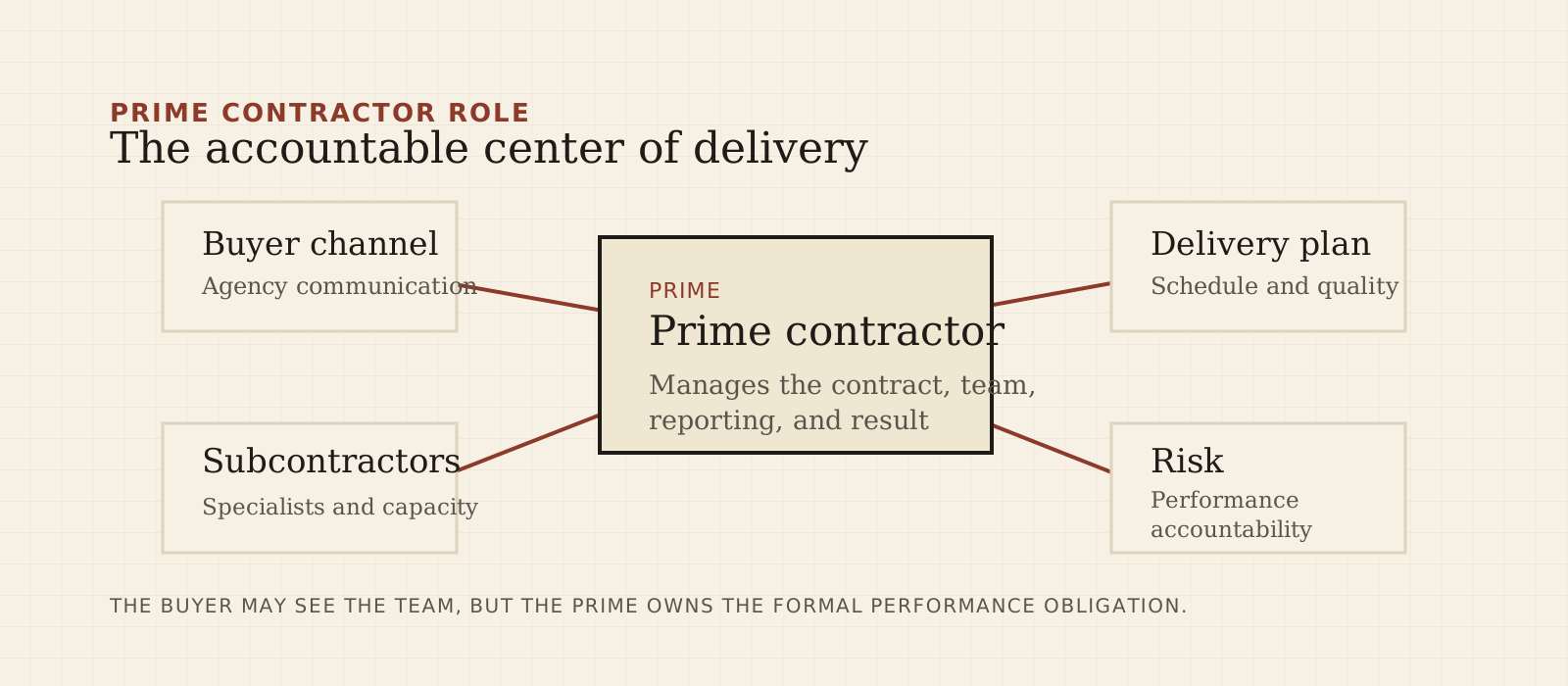
A prime contractor is the company that signs the primary contract with the buyer, owner, or government agency. The prime contractor is responsible for delivering the overall scope and managing the obligations tied to that contract.
In federal contracting, the prime is the entity the agency awards the contract to. Even when subcontractors perform important parts of the work, the prime remains the agency's main point of accountability.
- Direct award
- The prime contractor holds the contract with the buyer or agency.
- Overall delivery
- The prime coordinates work, schedule, staffing, reporting, and quality.
- Customer interface
- The prime usually owns the formal customer communication channel.
ROLES
Prime contractor vs. subcontractor.
The simplest distinction is contractual: the prime has the direct contract with the buyer, while the subcontractor has an agreement with the prime. That difference affects payment flow, authority, customer access, and risk.
A subcontractor can be essential to delivery, but the prime decides how the subcontractor is integrated, how work is assigned, and how customer-facing responsibilities are handled unless the agreement says otherwise.
- Prime contractor
- Owns the buyer relationship and overall performance obligation.
- Subcontractor
- Performs a defined portion of work under the prime.
- Teaming
- Combines capabilities but should make roles explicit before proposal submission.
COMPARISON
Prime contractor vs. general contractor.
In construction, people often use general contractor and prime contractor in overlapping ways. A general contractor may manage day-to-day construction delivery, while a prime contractor is defined by the direct contractual relationship with the owner.
In federal services and technology work, prime contractor is usually the more important term because it signals who holds the award, who manages subcontractors, and who carries responsibility to the agency.
- General contractor
- Often describes construction management and coordination responsibility.
- Prime contractor
- Describes the direct contractual position with the buyer.
- Federal context
- Prime status affects award ownership, teaming leverage, and past performance.
RECOMPETE STRATEGY
Why the prime contractor role matters for recompetes.
Before a recompete, the current prime contractor has delivery history, customer context, incumbent relationships, and often a head start on shaping the follow-on. Challengers need to understand that advantage before deciding how to pursue.
A small contractor may still have a strong path if it brings a missing capability, certification, location, vehicle, or past performance angle. The decision is whether to prime, team with another challenger, approach the incumbent, or monitor until the public signals get stronger.
- Incumbent advantage
- The current prime usually knows the customer, scope, staffing, and pain points.
- Challenger path
- A focused capability or certification can create a credible teaming role.
- Timing
- Earlier recompete monitoring gives subcontractors more room to find the right prime relationship.